Part One Origins & Construction
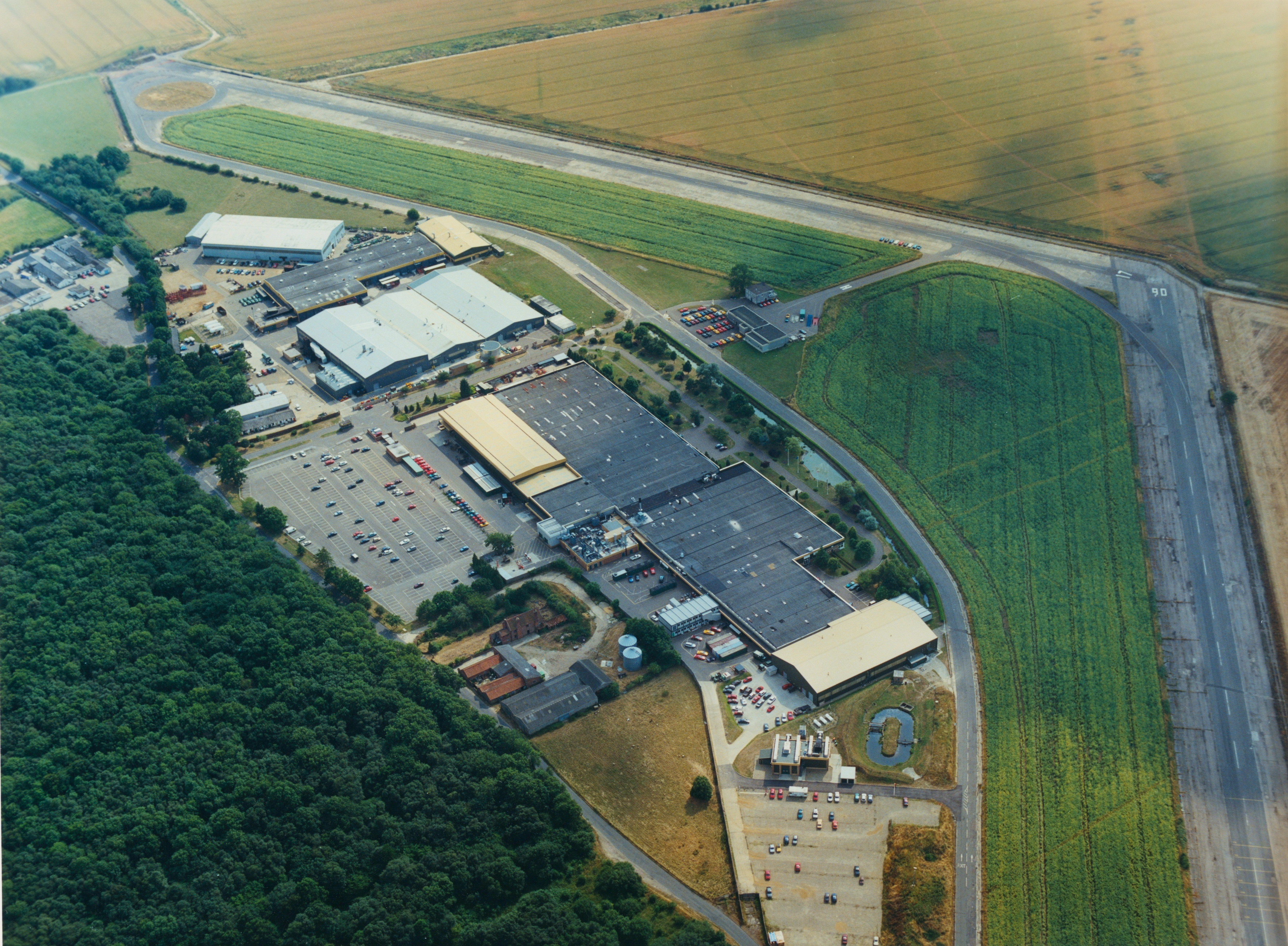
With the homologation count fixed at twenty and the calendar closing on a luxury-tax deadline, the work moved from the drawing office to the shop floor at Hethel. What Lotus set out to build was not a trim package but a road-registerable copy of a race car — stiffer, lighter, and more powerful than any Esprit sold to the public, assembled to a philosophy that put lap time ahead of showroom polish. This chapter is about how that car was made, and about the compromises that decision left visible on the finished product.
The Project Team
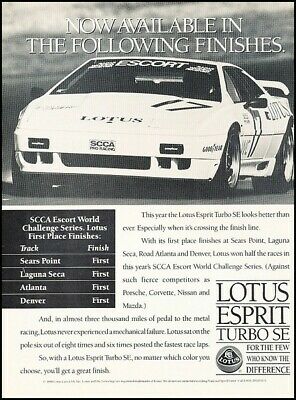
Development of the road-going car was well underway by October 1990 under the internal name the “World Challenge Race Car Replica.” Oliver Winterbottom managed the X180R project, with engineer Dave Minter responsible for the technical detail of building the car, and with engineer-driver John Miles and development engineer Roger Becker rounding out the team. Where the earlier Type 105 had been a clean-sheet race build converted from two Esprit SEs pulled off the line, the X180R faced a harder constraint: everything it carried had to survive United States road registration. As the Owner’s Handbook Supplement put it, the model had been “designed as a fully road going ‘replica’ of the successful Lotus Esprit SCCA racing car, with certain changes made in order to comply with emissions regulations and other legal requirements.”
A Cage That Did Two Jobs
Torsional StiffnessThe centerpiece of the build was the roll cage, and it was engineered to earn its weight twice over. Fabricated in steel tubing by Safety Devices — the Mildenhall, Suffolk motorsport-safety firm whose cages have equipped Lotus competition cars for decades — the structure was tied into the modified galvanized chassis at the backbone, the rear spring tower, and the front spring tower, with a braced bulkhead structure and door sill bars. Approved by the RAC for road use, the cage did more than protect the occupants: it raised the car’s torsional rigidity by 20 percent over an Esprit SE. It is the detail that separates the X180R from the aftermarket bolt-in cages that came before and after it — the tube was not merely bolted into a road chassis but made a load-bearing part of it, so that a safety device also served as chassis engineering.
Where the Weight WentFor all that added steel, the finished car came out roughly 300 pounds lighter than the model it was based on. The savings came from subtraction elsewhere: sound-deadening deleted throughout, an anthracite-gray lightweight carpet in place of the standard trim, the center-tunnel console and map pocket removed, fascia speakers and the digital clock gone, ashtrays deleted, and the spare wheel replaced by two “Fix It Fast” inflator cans on special brackets. Colin Chapman’s mantra — “adding power makes you faster on the straights, subtracting weight makes you faster everywhere” — governed the X180R as directly as it had the Type 105 before it.
The Type 910S Engine
The X180R kept the Esprit’s 2,174 cc turbocharged inline-four, the Type 910S, but reworked it for more boost and more air. Through oversized fuel injectors, a reprogrammed ECU, a redesigned exhaust, and boost raised to approximately 1 bar (14.5 psi), the engine produced 286 hp — a round factory figure of 285 hp appeared in period literature — some 46 hp more than the standard car. The head was blueprinted and its ports matched to the manifolds; the induction-system silencer was deleted, and the non-intercooled specification exhaust silencer exited on the left side. Interestingly, the road car deliberately stopped short of the race hardware: the Type 106 racers ran even larger Lotus Carlton injectors, and it was there, not on the homologation car, that the engine’s real appetite was fed.
Brakes, ABS, and the Chassis
Delco Moraine Anti-LockThe braking system was totally revised and actuated through a Delco Moraine anti-lock system — the three-channel ABS-IIIA that Lotus had helped develop and that arrived on the 1991 Esprit SE, controlling the two front brakes independently and the rear pair as a single circuit. It was the first anti-lock system ever fitted to an Esprit, and the World Challenge program had served as its proving ground: at Laguna Seca in 1990 one Type 105 ran the new system while the other went without, the ABS car outperformed its twin, and from Road Atlanta onward both wore it. The homologation rules rewarded that timing, permitting a manufacturer to homologate hardware slated for future production.
The HardwareBehind the wheels sat AP Racing four-piston aluminum calipers clamping 13-inch curved-vane ventilated front discs on aluminum bells and 11-inch rears, with Ferodo 3432 asbestos-free pads and SRF high-performance fluid. A Brembo parking-brake caliper, cable-actuated by a modified handbrake lever, ran independently and self-adjusting. The fog lamps were deleted so the openings could feed brake-cooling ducts. Suspension followed the same competition logic — a fully adjustable setup on the modified chassis, front spring frequency raised 40 percent and rear 12.5 percent, Monroe dampers with competition valving, and the ride height dropped, though only by 10 mm against the Type 105’s 20 mm, in deference to the road. The car rolled on 16-inch three-piece Revolution alloys.
The full factory specification — suspension geometry, brake dimensions, wheel and tire fitment, engine and transmission detail — is preserved as Lotus wrote it in the X180R Owner’s Handbook Supplement, and the competition-type equipment that the Monroney window sticker chose to advertise is cataloged on the equipment page. Each of the twenty supplements carried a foreword individually signed by Winterbottom.
Inside: Doeskin and a Mandated Airbag
The cabin was trimmed to keep the race-car character while satisfying the law. In place of soft luxury the X180R used a black, reflection-free “doeskin” — a napped, non-reflective trim fabric — over reclining seats with competition-type side supports and perforated hide on the wearing surfaces. Door trim was simplified with perforated-leather inserts. The instrument panel was a low-glare black face carrying a 100 mm electronic speedometer and tachometer, the tachometer rotated for readability. The one concession that ran against the grain was federally required: a passive restraint. Where the proposed European car would have taken a non-airbag wheel with a knee restraint and airbag sensor system, the North American cars were fitted with an air-bag steering wheel — as the supplement noted, the vehicle “incorporates a passive restraint system” because it was “built to meet vehicle regulations in the USA.” Winterbottom’s October 9, 1990 draft specification had also listed racing seat belts and an oil-pan baffle; both were struck before the run was assembled, the six-point harnesses almost certainly because the NHTSA would not have approved them for road use.
Performance Before Finish
All of this produced a genuinely quick car: 0–60 mph in 4.6 seconds, 0–100 mph in under 12 seconds, and a top speed near 170 mph. It also produced a car whose fit and finish told on where Lotus had spent its attention: performance came first and assembly quality second, because the car was conceived for the track. In the North American market for which every X180R was destined, that priority collided with expectation. Buyers and dealers who were paying the sticker’s $127,745 total expected flawless craftsmanship along with the pace, and the shortcomings became a problem.
Monaco WhiteThe paint drew the loudest complaints. Every X180R was finished in Monaco White, and the shade was not always consistent panel to panel — one major Lotus dealer went so far as to appeal to the company after taking delivery of a brand-new car whose several mismatched whites made it hard to sell. Dealers routinely touched up shipping and manufacturing damage before handover, with reports citing areas of gel-coat failure and paint sag that were corrected at bodyshops before customers ever saw the cars.
Console and SeatsInside, the perforated center console often looked wavy and hastily trimmed even on new cars — a small tell of an assembly line building to a deadline rather than to a concours standard. Once in use, the fabric seats proved fragile, wearing quickly and showing fabric pulling after minimal service.
None of this was accidental in the sense of being unforeseen; it was the predictable cost of a factory that treated the X180R as a race car first and a luxury product second. The record here is unusually candid because the dealers themselves documented it. It is worth stating plainly rather than smoothing over: the X180R was a superb thing to drive and an uneven thing to admire from three feet away, and both were true at once.
That trade — performance bought at the expense of polish — was exactly the right call for the arena the car had been built to enter. The twenty road cars existed to make a race car legal, and it was the race car, the Type 106, that would carry Lotus into a televised, factory-backed war with Porsche in the IMSA Supercar wars.